
A King Rat using a dual op-amp. It replaces the JFET output buffer with the spare op-amp stage. Its another schematic from this thread on Freestomboxes.org. This looked like a really smart idea, I had to try it.
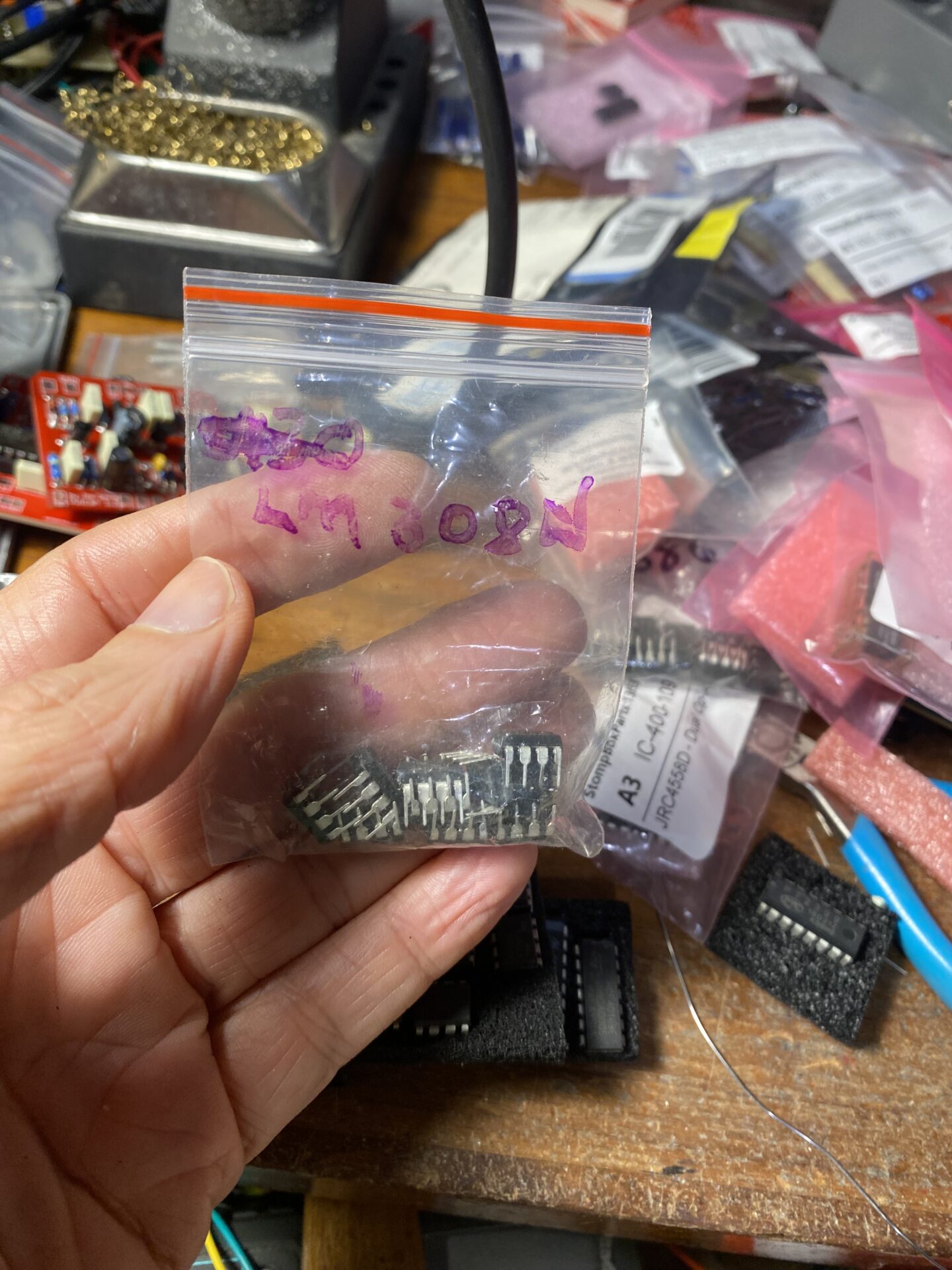
There is a lot of hype around the LM308. I’m not convinced I can hear any real difference. To be honest, I haven’t built anything with a real LM308. I did buy a bag “LM308” on AliExpress, I’m sure they’re legit.
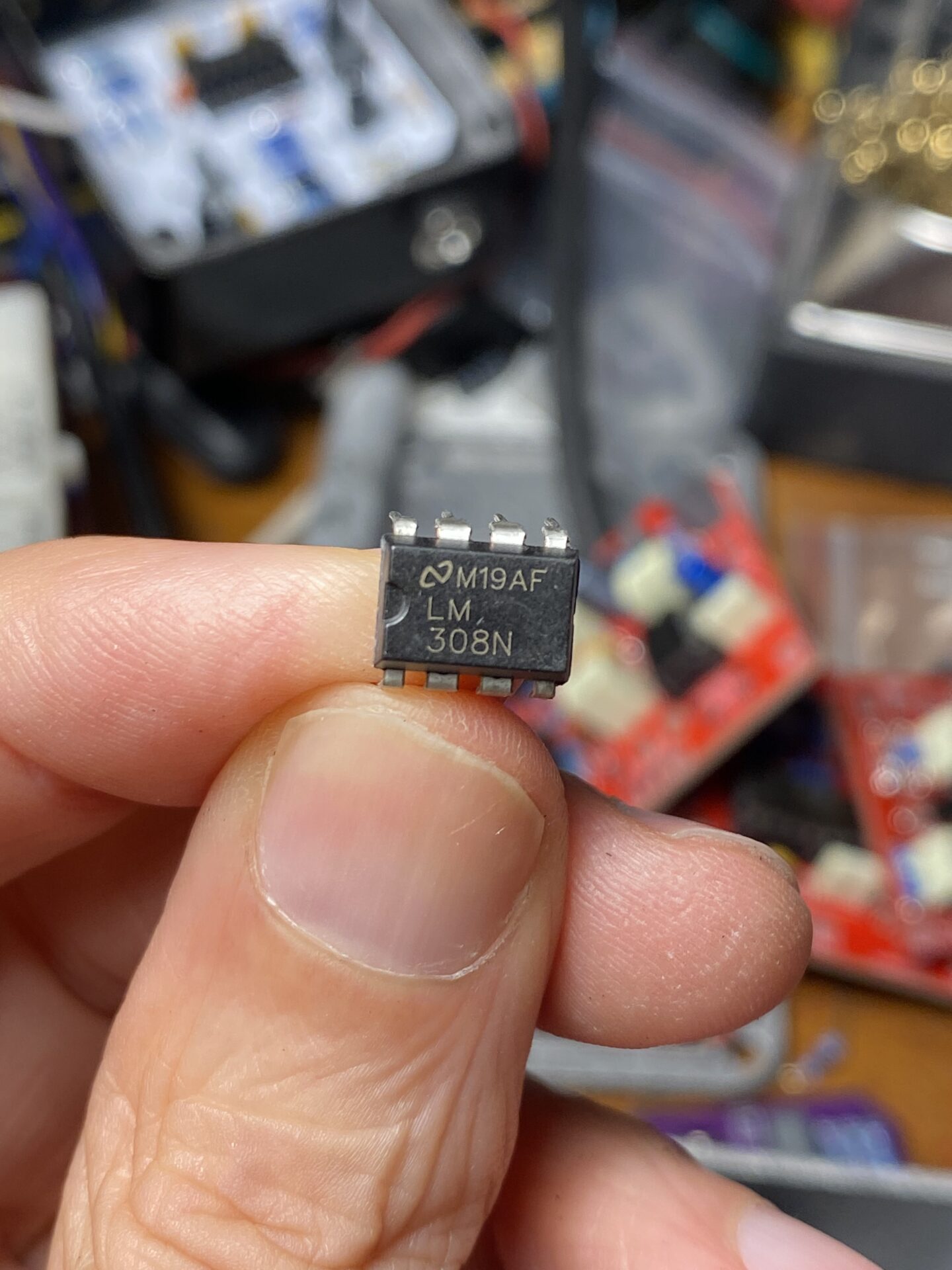
The video below demos 9 different op-amps in the Rat circuit. I can hear a difference, not where I would expect it, and not in a meaningful way where one op-amp clearly stands out from the rest. I think the clipping diodes really dominate sound after the op-amp. It could be that op-amp choice becomes meaningful if you can switch out the diodes like in this or this.
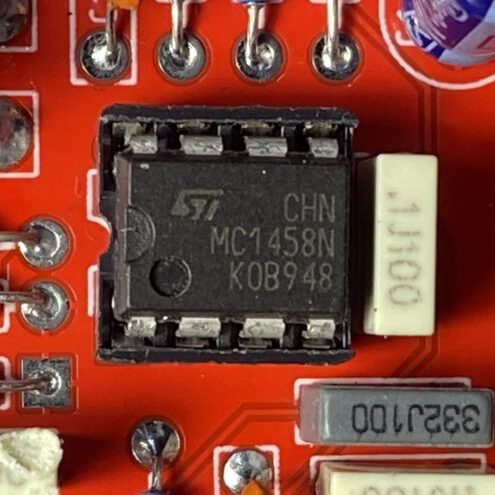
The LM308 is described as a poor quality op-amp. It also has a lot of hype. These go for $15 or more if you can find them. I get that scarcity drives up prices. I’m practical, I don’t want to spend more than I have to for anything, especially if I’m not going to notice the difference. I did worry I was missing something. To hedge my bet, I dug out the worst dual op-amp in my parts bin, the 1458. I probably bought this at Radio Shack. I felt good about replacing a poor quality single op-amp for a poor quality dual op-amp. It seemed like the right move in this situation.
Here is the schematic I drew up in Eagle PCB, copied from the FreeStompBoxes.org post.

I ordered a few PCBs from PCBWay.com. The tariffs were killing my will to continue with this hobby. Luckily they gang orders. I only had to pay shipping once for a group of 8 orders, which helped bring the price down to something reasonable.
I designed the PCB and a box. These days I’m designing the box first. This gets the knobs and LED in reasonable locations. Then I put the parts on the board. Seems obvious now.
For some reason pads for off board connections, power, in, out etc. lost their labels. Not sure how that happened, couldn’t figure out how to get them to show up. The best solution I could think of was to delete and replace all of these but, that was too much trouble, everything was looking good I didn’t want to mess it up.


I went with the name King Rat. I think I’m going to change this to Fink, Rat Fink, or Black Tar for the next one. King Rat is pretty good but, it implies that this is a superior ruler of distortions, which it arguably is. That said, I’m sure it has it’s detractors, who might complain, loudly even, that this is not the king! If you were using a pedal called: Fink, or Rat Fink, you would not have anyone to blame but your self for your disappointments, since the box was clearly labeled. The same goes for anyone who got “black tar” all over their rig.
The only issue with the box graphics is the placement for the label: DISTORTION, which ends up too close to the edge due to the curve of the enclosure. I should have used “GAIN” or “DIST” instead. The letters are tracked a little too close together for the engraving bit on the mill. Using a shorter name would fix all this. I recognized this at the time but, thought I should use labels from the original. In hindsight the difference between the words “distortion” and “gain” are really meaningless to guitar players, who read the labels, and ones that don’t won’t be bothered.
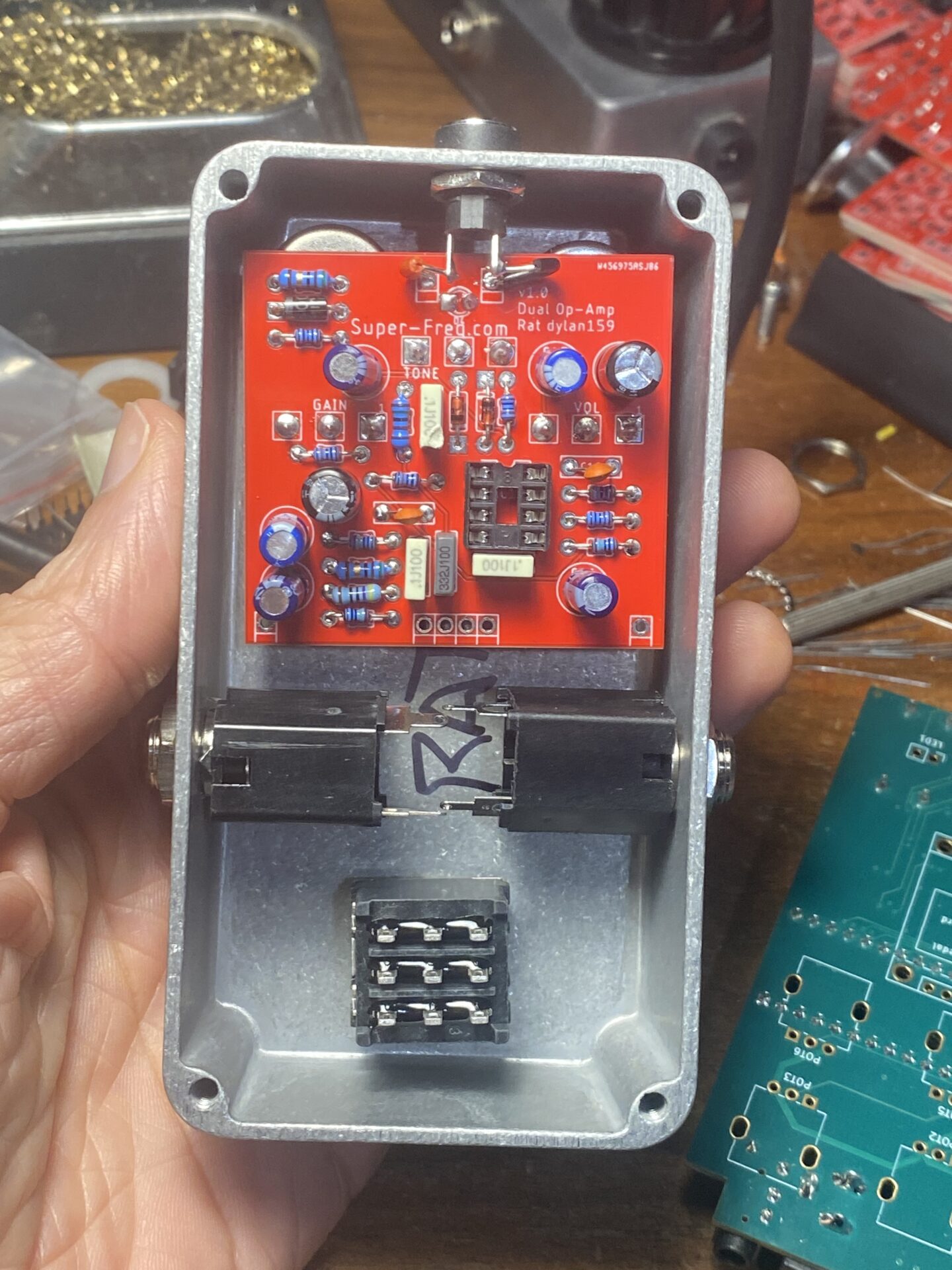
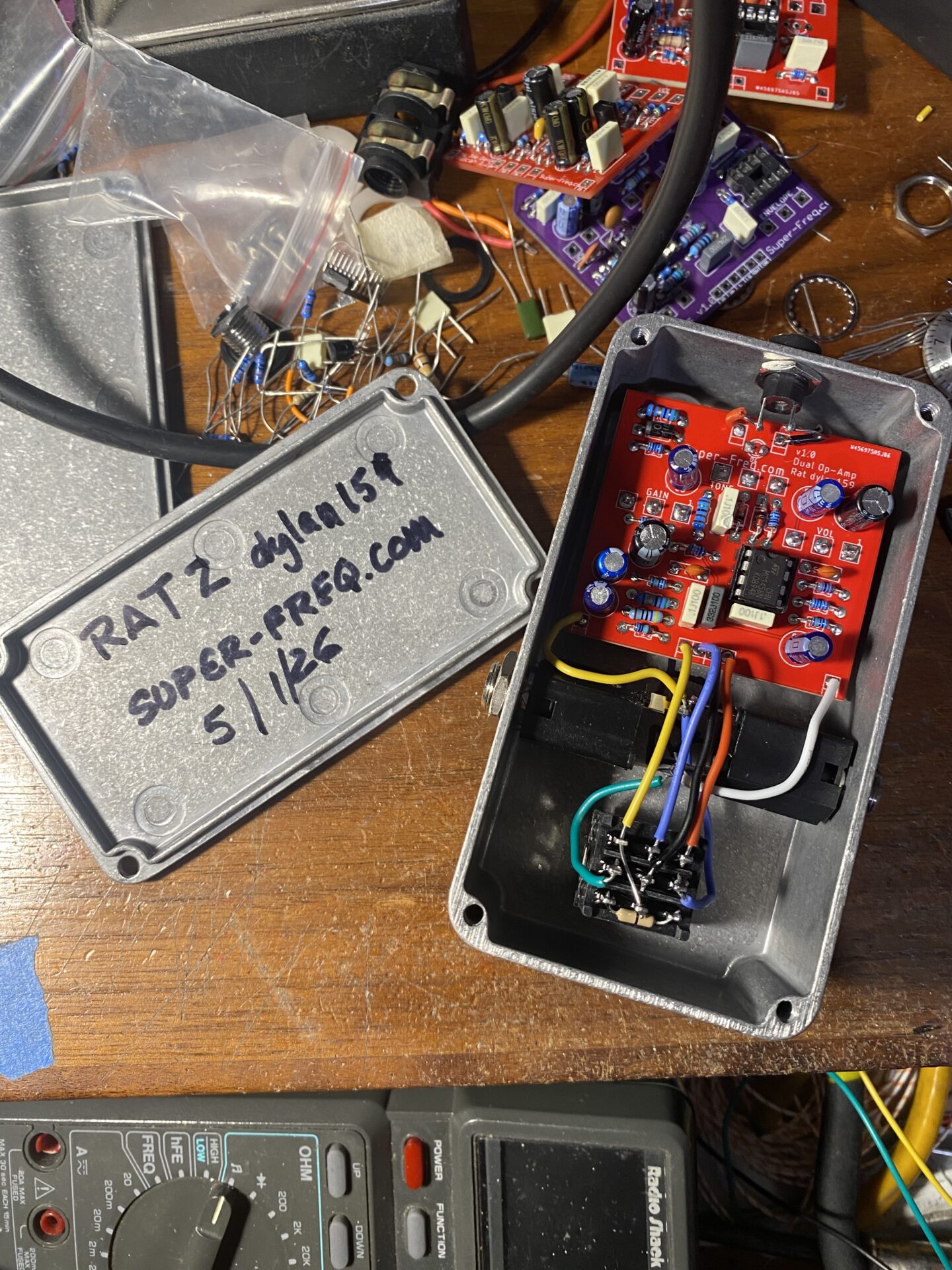
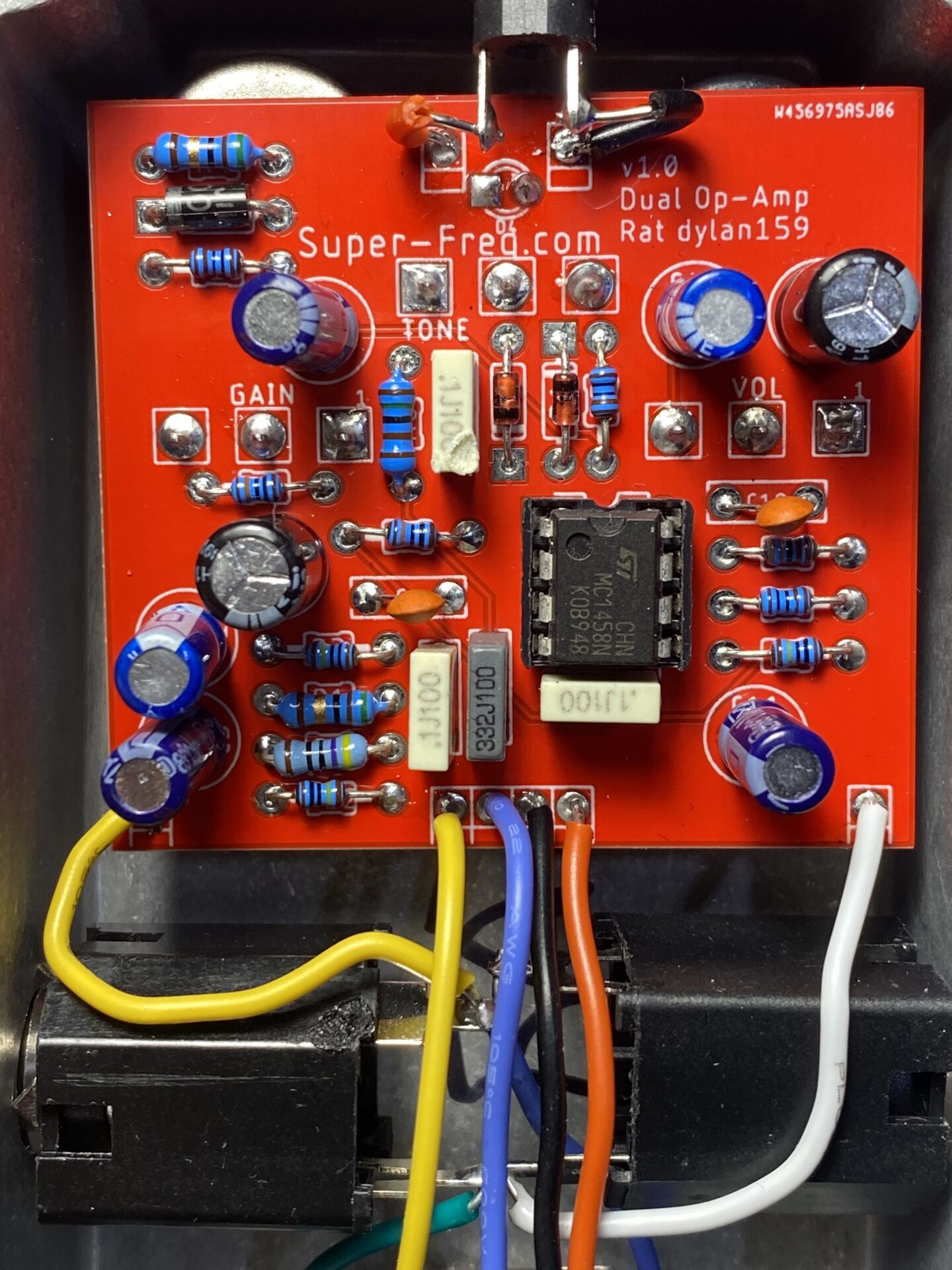
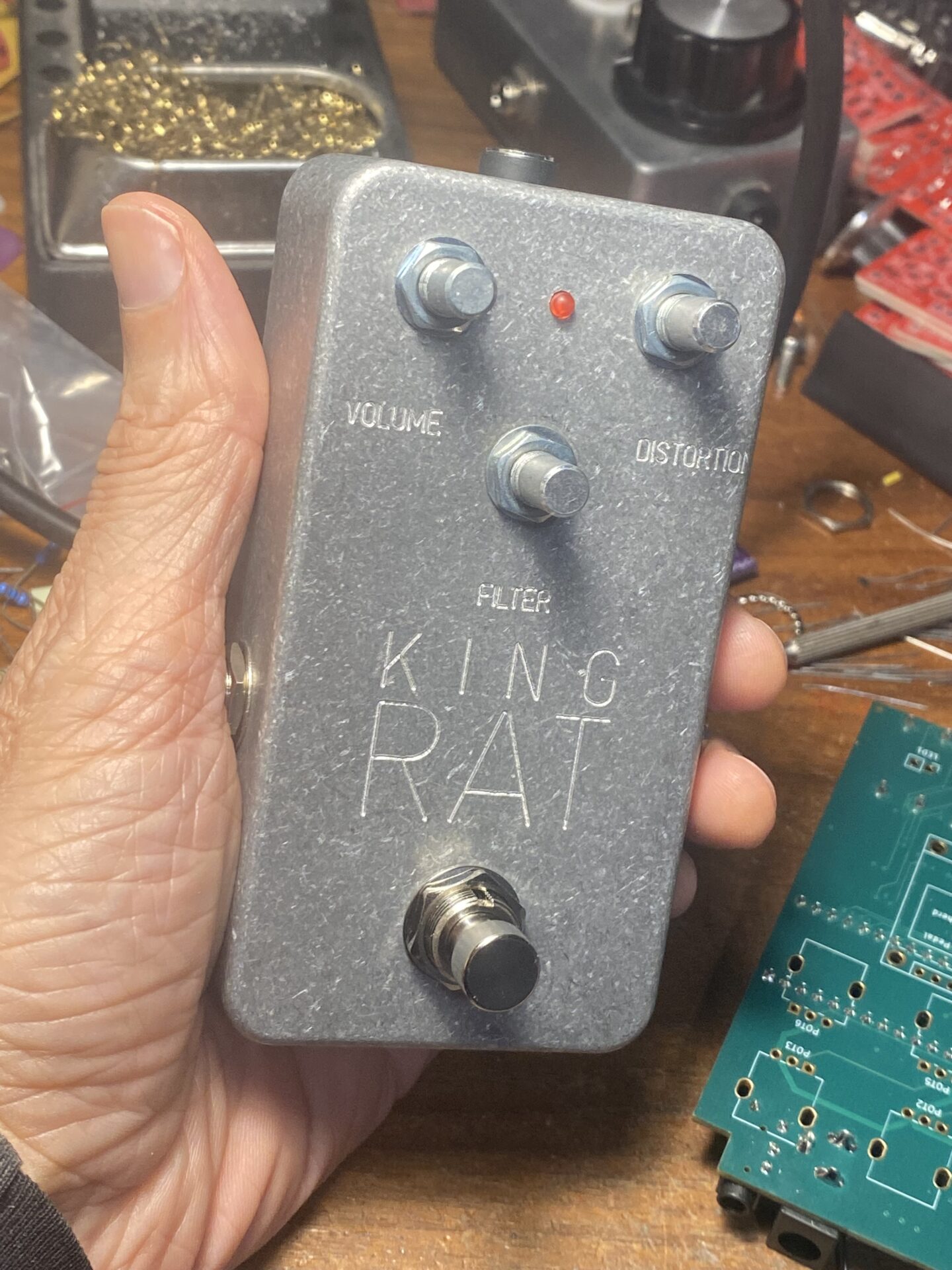
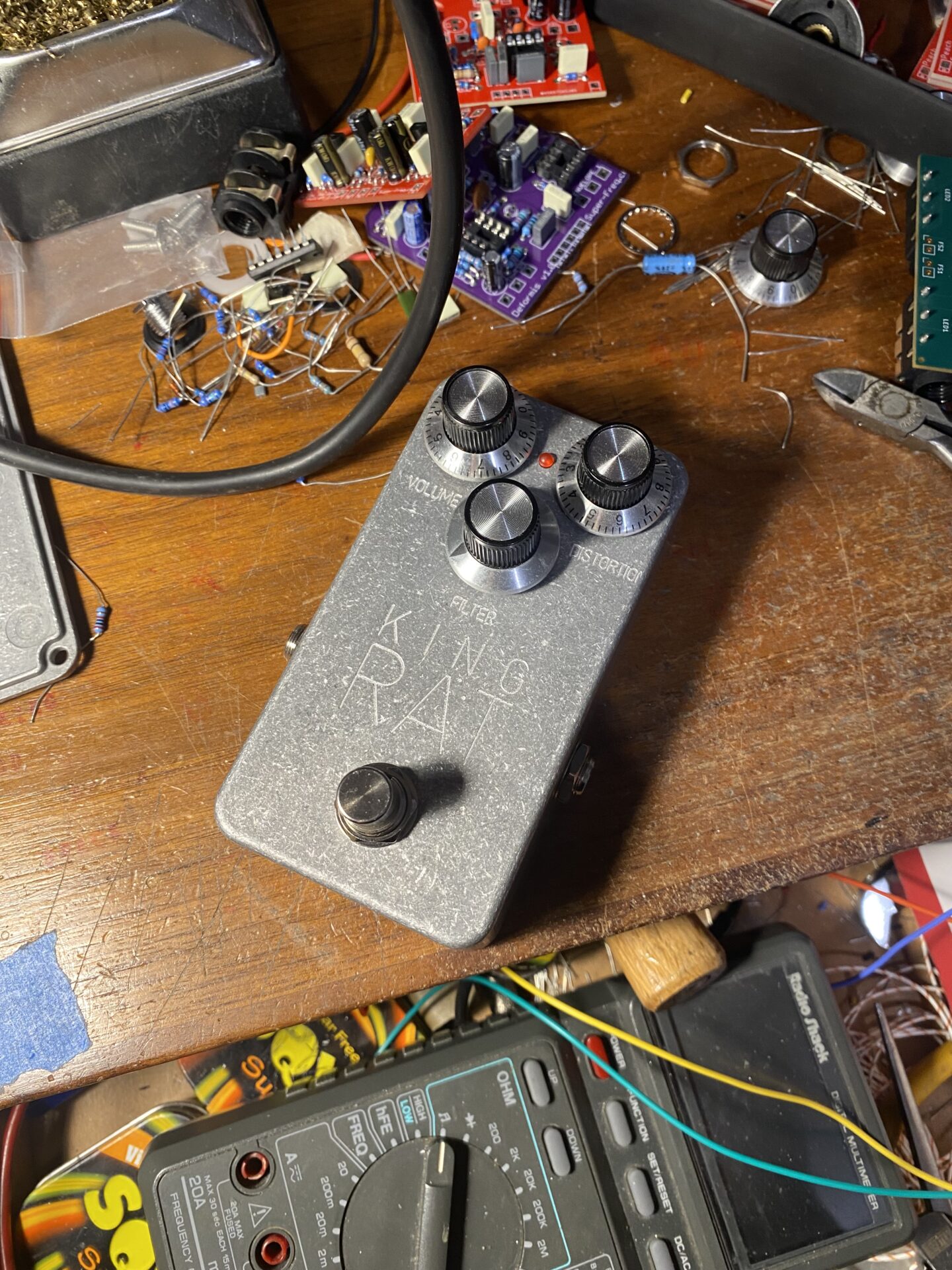
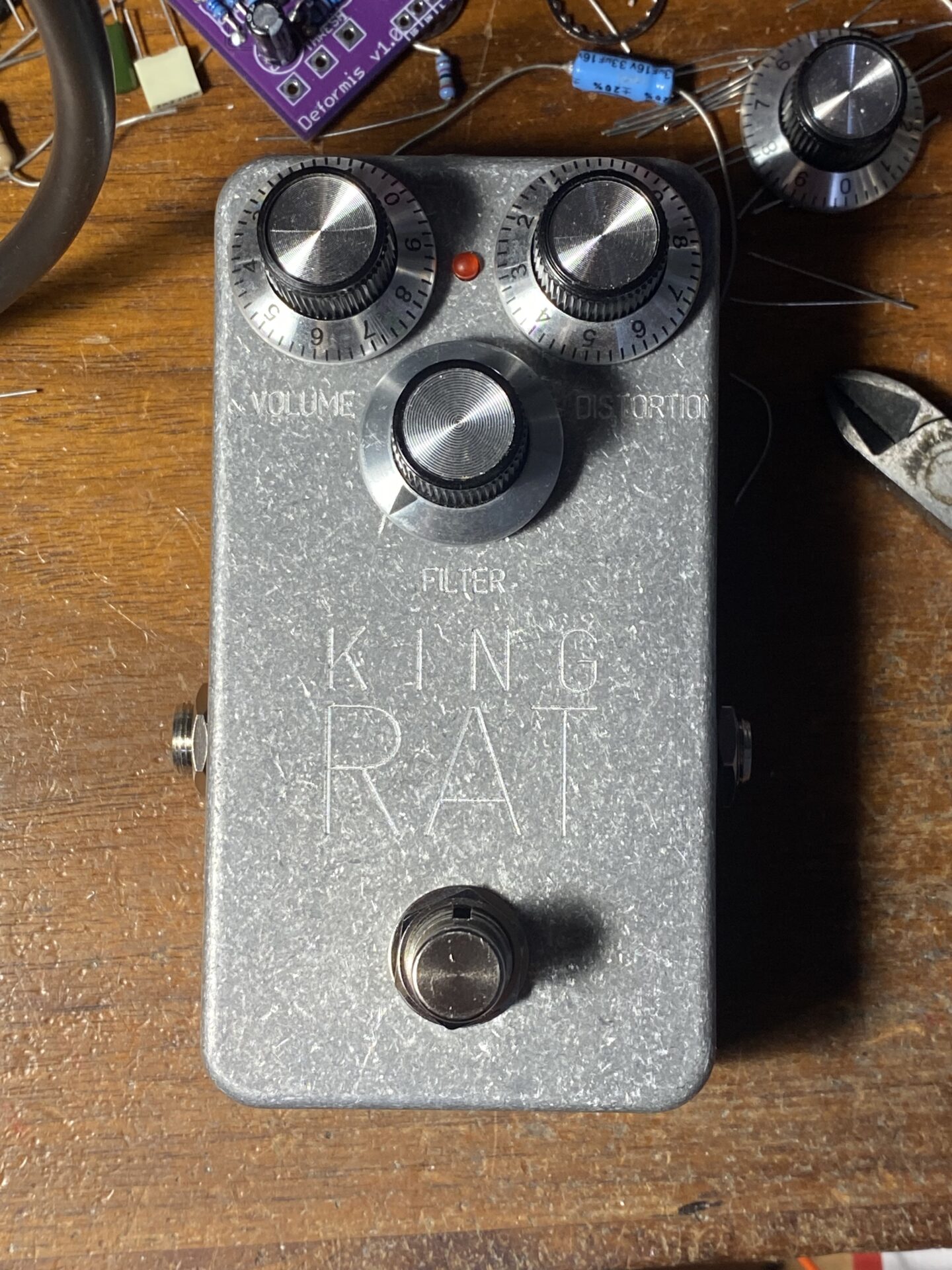
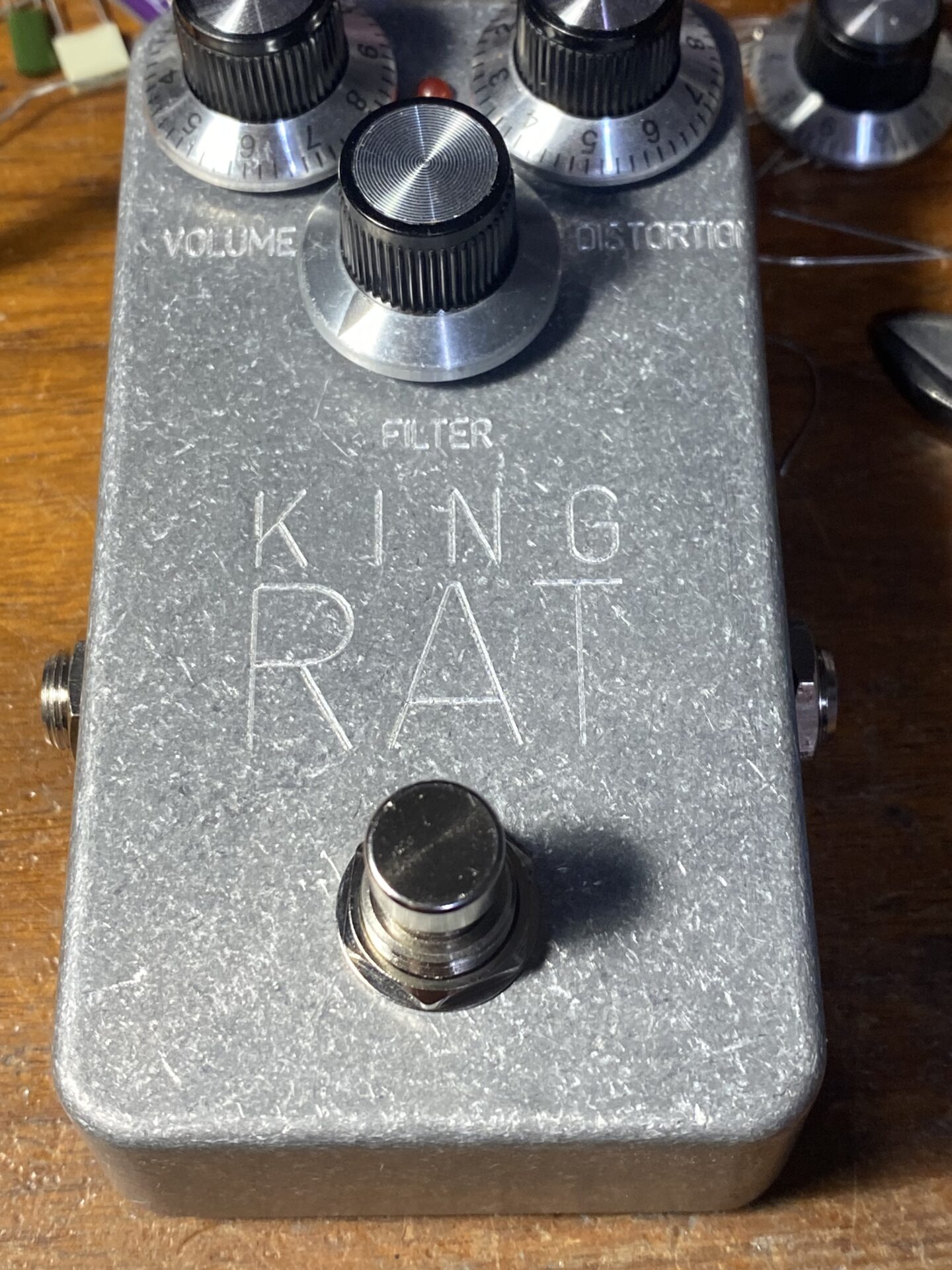
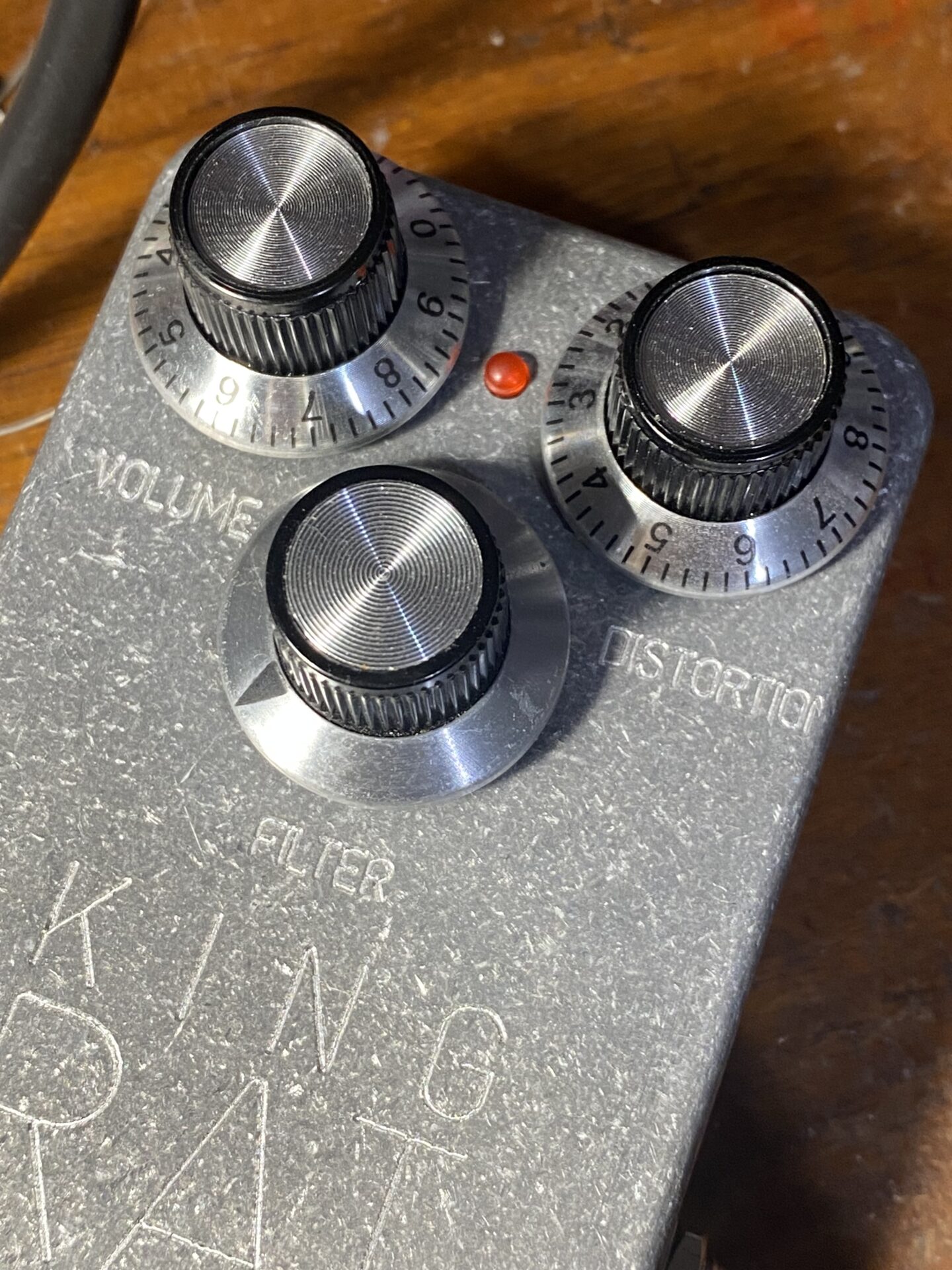
This build was super satisfying. Everything went together smoothly, it all worked on the first try and sounded great. Didn’t have to seek out hard to find parts, and pay a lot for them. In fact, I got to use some old cheap parts that might not have gotten to be used. I used the cheapest bare metal enclosures, and those cheap flying saucer knobs. The most expensive part in this build was the footswitch. I used one of these, rated for 30,000 cycles it will be worth the investment!
On knob choice. I used two knobs labeled 0 – 10 with ticks for VOLUME and DISTORTION. For FILTER I used the same type of knob with a pointer. The sense I’m trying to make is VOLUME and DISTORTION might think more is louder, better, or more. Larger numbers. With FILTER you might think a little more to the left or a little more to right. Maybe that doesn’t make any sense.
Speaking of the bare metal enclosures, these are the theme this year. Everything is generic, unfinished, bare metal. Sorry if you’re a fan of colorful graphics, you won’t find them here, at least not this year.
Did I mention how great this sounds? I’ll say it again. This sounds great. Better than a lot of other builds. I would highly recommend this as a build for anyone looking for some heavy distortion. The parts are easy find, and it easy to mod. You can try the Ruetz mod, replace the diodes with LEDs, or mix them with other types. You can try a wide variety of op-amps, since there are so many dual op-amps available. Does all that make this better than the original?